
And so, the main event – these are, in my eyes, the most outright brilliant albums from the year 2020. While my rap leaning is as obvious as ever, there’s a couple of splashes from across the spectrum: eartheater’s visionary indie lands at #9, Dylan’s rough and rowdy return grabs the #5 spot, and The Weeknd’s pop/R&B opus secures the coveted #2 spot. And, of course, who would take the #1 spot but urbano pioneer and “Compositor del Año” Bad Bunny – with YHLQMDLG, the Puerto Rican superstar creates a scene-defining, technicolour bridge between Latin music past and present. If you missed the first part of my 2020 roundup, you can read about albums 20 through 11 here – if you’re all caught up, then without further ado, here’s my top 10 of 2020.
David

#10 – Circles, Mac Miller
Until Mac died, I thought that mourning a celebrity was overstated; I soon realized that the celebrities that had shaped my life were either long gone or still breathing. What made Mac so compelling as both a musician and public figure is brought gracefully to light on his first posthumous release, Circles: finished with the help of producer Jon Brion, the tape crisps up the grounded introspection, earnest vocals and dreamy soundscapes of the rapper’s late career. As the softer, more vocally-driven counterpart to 2018’s Swimming, Circles is a charming, soothing and sorrowful foil – in great part thanks to Brion’s crystal-clear knowledge of Mac’s intent. While many will have a timeless attachment to tapes like Faces and Macadelic, it’s hard to deny the emotive brilliance of the rapper’s matured sound: whether through the bittersweet staccato of “Blue World” or in the piano-ballad throes of “That’s On Me,” Circles provides some of Mac’s most compelling stories and sentimental notes to date. For the Pittsburgh hero’s diehards, this album will always be a tough listen, but also a touching one; Circles is a spellbinding send-off, a collection of beautiful mementos haunted with laughter, love, and tear-trickling grief.

#9 – Phoenix: Flames Are Dew Upon My Skin, eartheater
When I first discovered the work of Alexandra Drewchin, known to the world under stage name eartheater, she delivered herself in ethereal snippets, a voice just managing to peer over the complex sound-collages she wove. The eartheater of 2020 is a different beast entirely. Over the last half-decade, the NY-based talent has shifted further and further towards her sung performance, harnessing her vocal flexibility just as much as her instrumental talents. Phoenix represents the culmination of this journey: on her latest LP, the multi-faceted musician plays more towards eletronically-augmented singer/songwriter than vocally-augmented electronic, with a tender, more vocally-driven set. Of course, this is still “tender” in eartheater terms – for every angelic “Diamond in the Bedrock” there’s an industrial “Goodbye Diamond” or alien “Burning Feather” – but the majority of the album is carried with the breathless grace of career highlights like “Pearl Diver.” The influences across this project are as disparate as they are beautiful: “Bringing Me Back” is scored by alternative-folk plucks, “Below the Clavicle”‘s shrieking vocals are anchored by haunting violin lines, and “Mercurial Nerve” looks to the musician’s experimental past for staccato production flair. The gentle guitars, empowering words and extraterrestrial cries of “How To Fight” prove a template for the album’s genius; much like its creator, it performs in profoundly alien terms, yet resounds with a deep humanity.

#8 – Manger on McNichols, Sterling Toles/Boldy James
Few albums have a story as rich as Sterling Toles and Boldy James’ Manger on McNichols. Conceived originally in 2007, MoM developed over the years through sparse clusters of recording, re-imagining and re-configuring, shifting from a boom-bap therapy session into a complex, jazz-laced odyssey. Fortunately, the work that Toles has compiled is worth every second of its tumultuous journey. While Boldy proved his mettle alongside The Alchemist on the impressive The Price of Tea in China, Toles’ perfectly-arranged pieces elevate the rapper’s words to new planes; emerging out of a wash of trapped voices and sluggish drums, the rapper trundles through “The Middle of Next Month” like a veteran, lamenting the loss of his unborn twins with a stony-faced “It’s been a series of unfortunate events.” The benefit of the extra years hasn’t been lost on Sterling Toles, who warps around Boldy’s stalwart vocals with a thrilling, layered and ever-changing palette of sounds. Toles’ morphing production is the mortar to Boldy’s evocative brickwork: together, the pair form a shifting tapestry of rugged corners, whispered struggles, and concrete tears.

#7 – Spirit World Field Guide, Aesop Rock
If there’s any rapper with the ability to describe alternate dimensions, it’s the statistically-proven “most verbose” of the lot, Mr. Aesop Rock. Since 1997, the New York-born MC (born Ian Bavitz) has been a champion of the underground, serving up some of the most complex, poetic and resonant images in the entire rap canon – and with the freedom of the abstract “Spirit World” to play with, Bavitz finds yet another career highlight with SWFG. A kaleidoscopic journey through Cambodian lakes, gloomy mountain-tops and his own back porch, the musician’s 8th album offers as diverse a palette as any can claim, collating fantastical, tongue-in-cheek narratives told with a near-unmatched technical skill. As always, the rapper’s outlandish tales can form acute lenses for concrete issues – “The Gates” offers an abstract look at societal disillusionment, “Kodokushi” is a shrouded profile of the isolated artist, and “Marble Cake” proves a resonant re-affirmation of journey over destination – but even stories about back pain and fruit flies are given an otherworldly quality by Bavitz’ pen. Yet what truly elevates SWFG above Rock’s other releases is its innovation: alongside modernising his range of flows, the musician has put in serious work behind the boards, resulting in his most diverse and resonant set of beats to date. The resulting product is a monolith: from the shuddering guitars of “Gauze” to the whimsical comedy of “Dog at the Door,”
Aesop Rock has produced another sprawling collage of his singular talent.
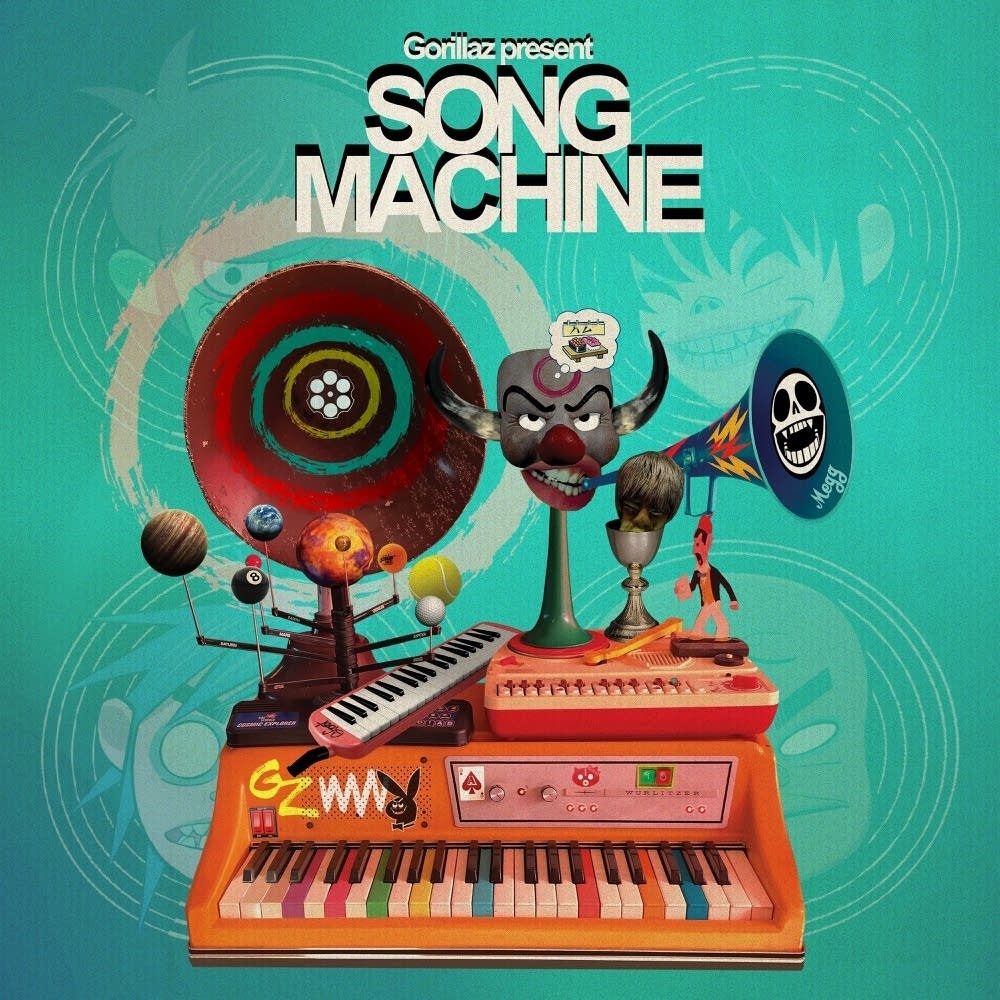
#6 – Song Machine, Season 1, Gorillaz
To hear a good Gorillaz album in 2020 would have been a treat enough; to get one on par with Plastic Beach is a different triumph entirely. With the conceptual single-mindedness of Humanz thrown aside, Albarn seems to have set his focus on simply producing the highest-quality singles he can – and focusing on the “album” side of the story at a later date. The resulting collection plays like the greatest hits of an unknown era, collating a wide-ranging setlist that just keeps hitting home runs. Albarn’s ability to harness disparate voices is brought to glorious fruition: legends from Elton John to Robert Smith are provided with tailored, shapeshifting soundstages, while modern greats from Kano to ScHoolboy Q add their own punchy takes to the virtual band’s chameleonic sound. And in the driver’s seat as 2D, Albarn carries the project to its kaleidoscopic destination; though engulfed by the most stacked feature list of the year, the musician’s vocoder-riddled tones remain the project’s beating heart. Gorillaz, unbound by restraints of concept and lore, sound thoroughly reinvigorated.

#5 – Rough and Rowdy Ways, Bob Dylan
What praise can be heaped on Rough and Rowdy Ways that hasn’t been done so already? Neil McCormick called the album a “a cryptic cauldron of truths and clues, philosophy, myths and magic”; AllMusic’s Thom Jurek affirms it “will be decoded for generations”; Sam Sodomsky, for Pitchfork, calls it a “gorgeous and meticulous record” with lyrics “dense enough to inspire a curriculum.” It is, indeed, all of these and plenty more. Dylan’s return to original music has produced a sublime set aware of its own status, a paradoxically timeless collection of songs fully reflective of their own time-gated import. Leaping from modernity to eras gone by, Dylan’s words expand his re-configured Americana, pulling from driving blues and clockwork groove as he delivers stories of Pacino-imbued robot commandos and ancient Greek muses. His lyrics are as cryptically-brilliant yet mortally-grounded as always, furnished with a set of gorgeous, open spaces and shimmying guitar lines. That’s to say nothing of centrepiece closer “Key West,” a longing 9-minute odyssey that’s going to stay close to my heart for a long, long time. Still unfazed as he heads into his 80s, Dylan has delivered another sublime tome to unpack over the years to come.
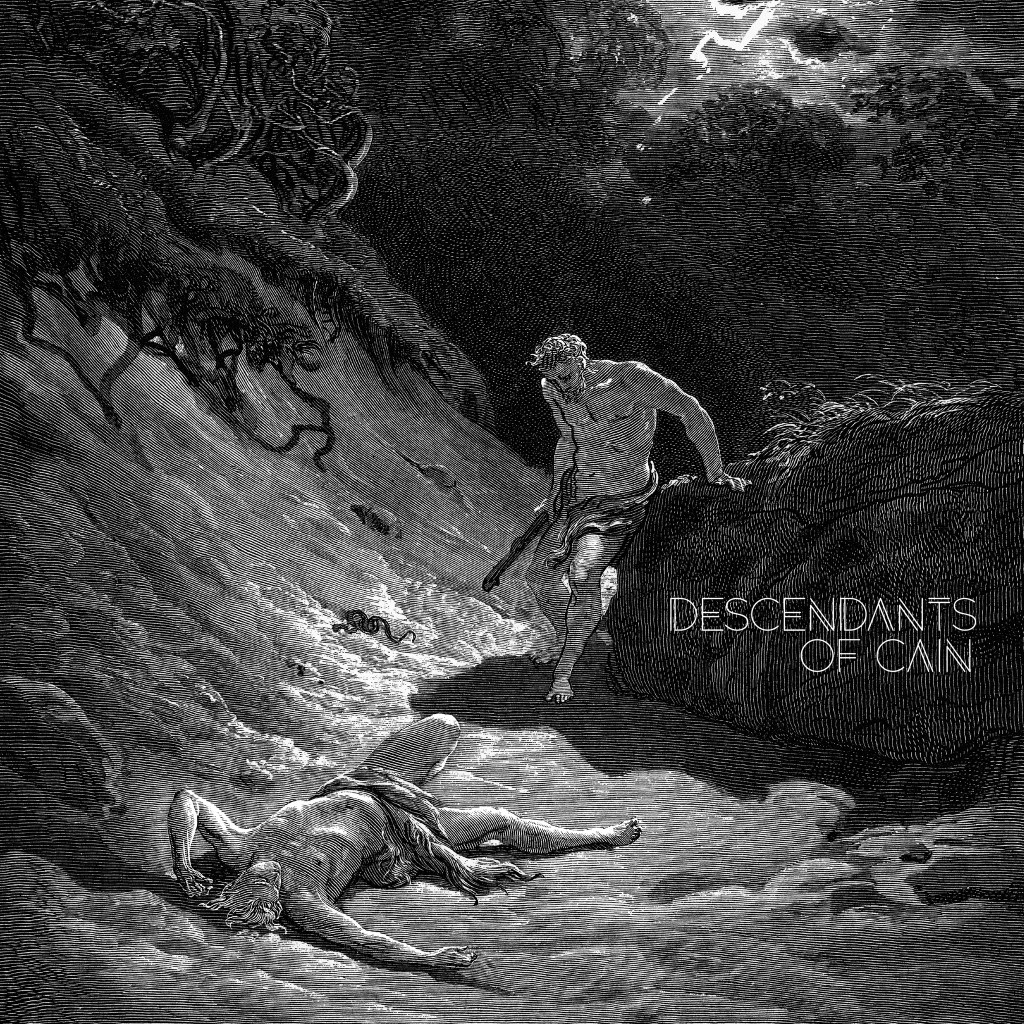
#4 – Descendants of Cain, Ka
Brownville’s Kaseem Ryan might just be the best rapper alive. Since his 2008 solo debut, Iron Works, the New York MC has captivated audiences with tales of his cutthroat home borough, framed through the expansive, album-wide metaphors that only he can deliver. While The Night’s Gambit painted New York’s struggles as an elaborate game of chess, and Honor Killed the Samurai paralleled Brownsville with feudal Japan, Descendants of Cain embraces biblical narrates for its complex mode of storytelling, painting his borough’s recurrent violence in the light of the titular betrayal. With spectres of experience lining every word, Ka’s writing is as poetic as ever, describing cycles of poverty, oppression and violence in wistful melancholy:
“To defeat us, the wicked brew poison blend / The skinniest toothpick grew quick from boys to men / While I scored, many felt the sword, not enjoyed the pen / Cold when it broil friend, I’m loyal ’til the voyage end.”
When undercut with the sparse, gloomy soundscapes that have become a staple of the rapper’s best works, the resulting product is a sublime example of the medium’s potential: Ryan, like always, continues to raise the bar for rap’s poetics.
Read my full review of Descendants of Cain here, via AllMusic.

#3 – Purple Moonlight Pages, R.A.P. Ferreira
The aptness of the initials “R.A.P” is not lost on Rory Allen Philip Ferreira – in fact, it’s the bones behind a complete rebrand. With a new moniker comes a new form of liberation; here, the rapper formerly known as Milo sounds fundamentally different – bounding, not spiralling, laughing, not cynical, grounded in his philosophy. While stellar works like so the flies don’t come dove full-force into abstraction, PMP finds equal joy in earnest humanity: alongside philosophical staples like “GOLDEN SARDINE” and “DECORUM,” PMP dips into Madvillain-esque irony on “LEAVING HELL” golden-age nostalgia on “RO TALK”, and even a J Cole-pioneered laundry anthem. Production from the Jefferson Park Boys ensures a tinkling, jazz-laced and colourful tone throughout, a strain that Ferreira matches with his own free-form playfulness. Yet for all of the album’s wry free-spiritedness, Ferreira’s verses are as meticulously-crafted as ever, a woven tapestry of literary references, philosophical posings and socially-charged laments. With a fresh breath caught in his lungs, Ferreira crafts perhaps his most enduring work yet, a boundless expression of spirit captured in tiny, insular pages.

#2 – After Hours, The Weeknd
Every Weeknd fan has a favourite “era”: die-hards reminisce over the smoke-cloud melancholy of Trilogy, Kiss Land’s supporters fervently reinforce its cult status, and pop-heads long for the radio dominance of the BBTM and Starboy rollouts. To combine these vastly different strands into a cohesive thread seemed futile – that is, until 2020 opus After Hours. Albums that land the kind of success After Hours has enjoyed – and we’re talking an album where interludes garner over 50 million streams – usually do so by conforming to what audiences want to hear, making feel-good, relatable or pop-chasing music. But while After Hours has platinum-plaque production values, it turns them towards making a bold statement piece, fusing the longing R&B, glitz-ridden pop and haunted introspection of Tesfaye’s material into one intoxicating narrative. On top of refinement comes innovation, too – U.K. garage, liquid D&B and pounding trap colour the threads of Tesfaye’s journey, the executive production of Oneohtrix Point Never ensuring the vocalist’s chaotic emotions are scored with equally striking sonics. Make no mistake: After Hours is a classic in the making – built on the lessons of eight years in the limelight, this album is the singular culmination of every aspect of Abel Tesfaye’s career.
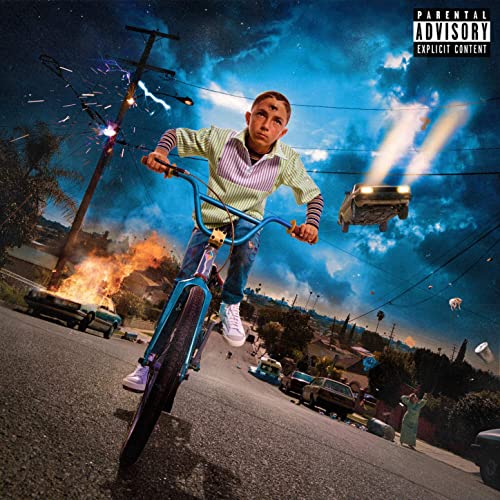
#1 – YHLQMDLG, Bad Bunny
While X100PRE (“Por Siempre”) offered a perfect taster of El Conejo’s Latin-infused trap, 2020’s Yo Hago Lo Que Me Da La Gana proves a cultural moment in of itself. As much of a defining statement as any has made for the intangible umbrella of “urbano,” the Puerto Rican’s sophomore album synthesises old and new in an expansive monolith of the Latin sphere. With a steadfast production cast (Tainy, Taiko, Subelo NEO), the album offers up hypnotic, technicolour examples of every style in the spectrum: “Soliá” and “Ignorantes” perfect the breezy vibes of modern reggaeton pop, “Está Cabrón Ser Yo” embraces the trap-dominated legacy of malianteo, while “La Santa,” “Bichiyal” and “Que Malo” bring back reggaeton’s titans for a run at perreo excellence. The sounds that staked Bunny’s claim return in their strongest iterations yet – “Vete” is X100PRE‘s melancholia personified, and “25/8” is a firm contender for the best latin trap song ever made – while the tail end is dedicated to perfecting calle-ready braggadocio and offering thanks to his long-term fans. That’s to say nothing of the 5-minute “Safaera,” a chameleonic dancefloor anthem which leaps between 7 different beats as its legendary MCs deliver… well, the kinds of narratives you’d expect from a classic reggaeton floor-filler. As one of the scene’s most celebrated pioneers, Benito Antonio Martínez Ocasio is the one to carry this opus home: whether he’s pulling Yaviah out of retirement to coin new slang, re-defining perreo norms, or creating shifting reggaeton odysseys alongside the scene’s old guard, the PR star proves one of the most talented faces in modern music.
And there we have it, that’s your lot. Hopefully I’ve managed to convey a little slice of what made these records so powerful for me, and I hope that you’ll be tempted to pick up a couple yourself (though Aesop’s density can be a little intimidating). Whatever your plans for the New Year are, I hope you enjoy them to the (legal) fullest, and here’s to the end of the lockdown-iest year to date.
David
 david-crone.com
Leave a comment